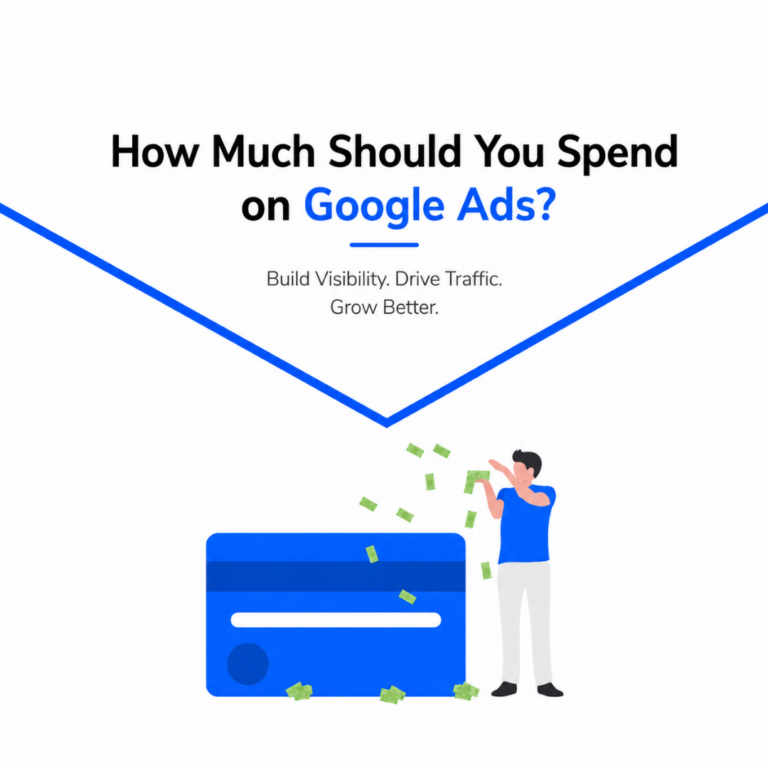
Small businesses often assume Google Ads is only for companies with huge marketing budgets.
That’s not true.
A small business can use Google Ads effectively if the campaign is focused, measurable, and connected to a clear business objective.
The biggest advantage of Google Search Ads is intent.
When someone searches for a product or service, they are actively expressing an interest or need.
That can make search advertising particularly valuable for businesses offering services that people actively search for.
Start With One Goal
Don’t start your campaign with ten different objectives.
Choose one.
For example:
Generate phone calls.
or:
Generate consultation requests.
or:
Generate online purchases.
Once you have a clear goal, campaign setup becomes much easier.
Target High-Intent Searches
Consider a person searching:
“digital marketing agency Jaipur”
compared with someone searching:
“what is digital marketing?”
The first search may indicate commercial intent.
The second is primarily informational.
This doesn’t mean informational searches are useless, but they may not be equally valuable for a lead-generation campaign.
Your keyword and targeting strategy should therefore reflect customer intent.
Create Relevant Ads
Your advertisement should match what the person searched for.
If someone searches for “Google Ads management agency,” your ad should clearly communicate that you offer Google Ads management.
Relevant messaging can improve the overall user experience and make the next step clearer.
Send Visitors to the Right Page
One of the biggest mistakes small businesses make is sending every Google Ads click to the homepage.
If the advertisement is about SEO services, send the visitor to an SEO service page or focused landing page.
The page should continue the message started by the advertisement.
Track Conversions
Clicks are not enough.
You should know what happens after someone clicks.
Depending on your business, conversions could include:
- Form submissions
- Phone calls
- WhatsApp enquiries
- Purchases
- Bookings
- Sign-ups
Without conversion tracking, you’re essentially trying to optimize a business campaign using incomplete information.
Start Small
Small businesses don’t need to launch 20 campaigns on day one.
Start with the service or product that has:
- Strong demand
- Good margins
- Clear customer intent
- A competitive offer
- A reliable conversion process
Then collect data.
Once you understand what works, expand.
Use Negative Keywords
Not every search related to your keyword is valuable.
For example, a business selling premium products may not want traffic from people searching for “free,” “DIY,” or unrelated informational queries.
Negative keywords can help reduce irrelevant traffic.
Use Automation Carefully
Google Ads increasingly uses AI to assist with targeting, bidding, and creative optimization. Google’s AI Max for Search campaigns is designed as an optimization layer within Search campaigns, rather than as a separate campaign type.
Automation can save time, but businesses should still understand their targeting, conversion goals, search terms, budgets, and performance data.
Don’t Judge the Campaign Too Quickly
A few clicks don’t provide enough information to understand an entire campaign.
Give the campaign enough time and data to identify patterns, while monitoring for obvious problems such as irrelevant traffic or tracking errors.
Final Thoughts
Google Ads can be a powerful growth channel for small businesses when used strategically.
The objective isn’t to spend as much money as possible.
It’s to identify profitable customer demand and capture it efficiently.
Start with a focused offer, target relevant searches, build a strong landing page, track conversions, monitor performance, and scale based on evidence.
Small budgets can work—but only when the strategy behind them is disciplined.